


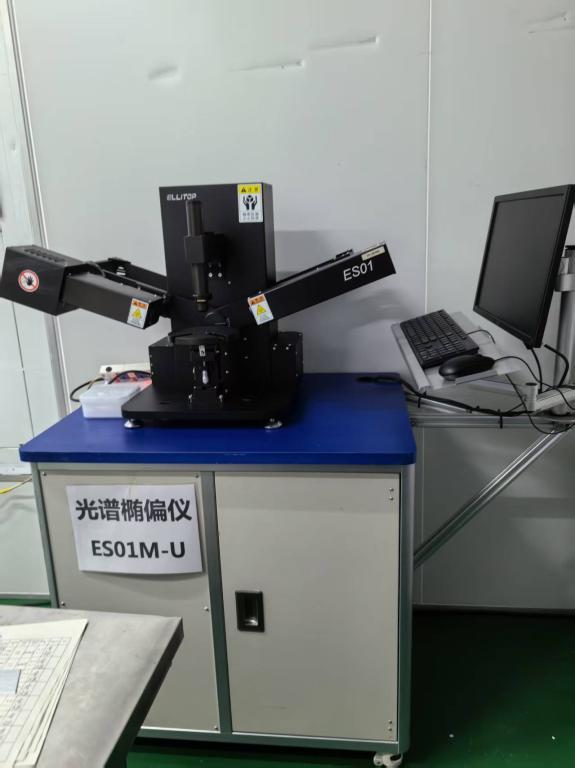
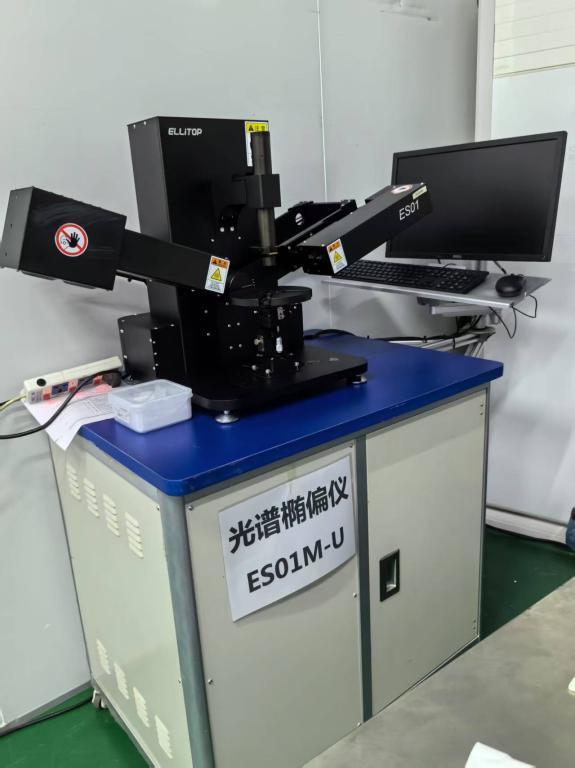
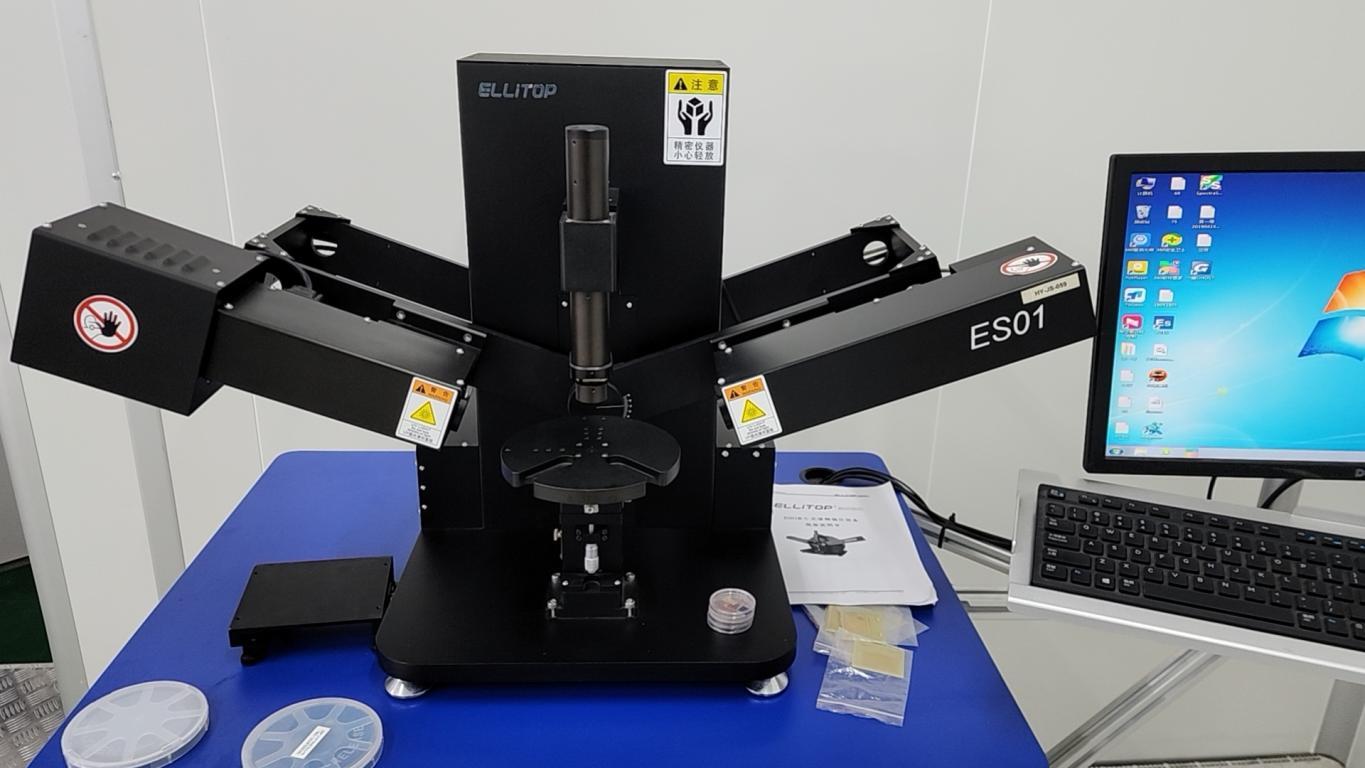
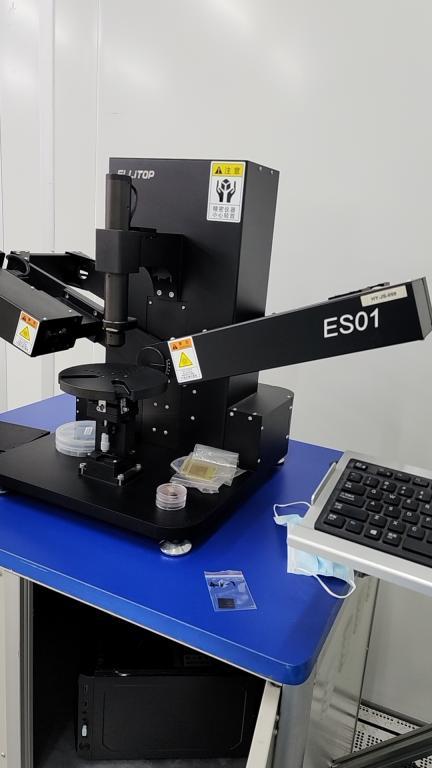
Used Spectroscopic Ellipsometer/Microspectrophotometer (MSP) Integrated Ellipsometric Spectrometer Infrared Range (193–2500 nm)
Contact Info
- Add:Room 101, Building 5, No. 186 Zenglu Road, Chashan Town, Dongguan City, Zip: 523380
- Contact: 杨肖梅
- Tel:0769-23105805
- Email:2531943211@qq.com
Other Products


The Ellipsometric Microspectrophotometer (MSP) integrates ellipsometric spectroscopy and microphotometry.
I. Core Measurement Capability Validation
Spectral Range
Supports ultraviolet to near-infrared wavelengths (193–2500 nm), with deep ultraviolet (193 nm) extension suitable for ultra-thin films (e.g., atomic layer thickness) and semiconductor bandgap analysis, aligning with the spectral range of mainstream high-end equipment.
Special Note: 193 nm deep ultraviolet technology is indispensable for detecting semiconductor ultra-thin films (e.g., high-k dielectrics).
Precision and Sensitivity (Details Manager Yang: 18103045976)
Film thickness measurement precision reaches the angstrom level (0.1 Å scale), covering single atomic layers to 10 μm thickness, meeting the technical standards of top-tier ellipsometers in 2025 (mainstream repeatability precision ≤0.01 nm).
Capability to analyze parameters such as complex refractive index (n/k) and extinction coefficient is an industry-standard feature.
Measurement Speed
Full-spectrum acquisition achieves sub-second speeds (e.g., 0.3 seconds), comparable to 2025 new models like SEMILAB SE-VM, meeting the demands of online process monitoring.
II. Hardware Configuration Features
Optical Path and Detection
Rotating compensator modulation technology enhances signal-to-noise ratio and suppresses mechanical errors, a common solution for high-end ellipsometers.
Minimum spot size ≤30 μm, supporting micro-area patterned structure analysis (e.g., semiconductor nodes below 45 nm), consistent with the 2025 model parameters of Wuhan Eoptics Technology.
Automation Modules
Automatic variable-angle system (20°–90°) is a standard feature, with angle control precision reaching 0.01° per step.
Mapping platform supports scanning of 180–300 mm samples, compatible with semiconductor wafer-level inspection.
Environmental Adaptability
Temperature-controlled stage (-70°C to 600°C), vacuum chamber, and liquid cell compatibility have been validated in multiple industrial-grade devices.
III. Typical Application Scenarios
Semiconductor Manufacturing: Monitoring of high-k dielectric/gate oxide films, relying on deep ultraviolet wavelengths and angstrom-level precision.
Photovoltaics: Characterization of extinction coefficient and bandgap for CIGS/CdTe thin-film batteries, requiring broad spectral support.
New Material R&D: Interface analysis of two-dimensional materials (e.g., graphene), relying on micro-area spot size and high sensitivity.
Biomedicine: Monitoring protein adsorption layer thickness, leveraging non-contact measurement advantages (Note: Actual applications require validation of sample compatibility).
IV. Software and Expansion
Built-in optical constant database and EMA model are industry-standard configurations, supporting complex multilayer structure fitting.
Dual-mode software interface (Engineer/Simple Mode) meets both research and production line needs, as seen in designs by brands like SEMILAB.
Key Parameter Benchmarking Summary
FeatureFSO1M-U ParametersIndustry Benchmark
Spectral Range 193–2500 nm 193–2500 nm (SEMILAB GES5E)
Film Thickness Precision 0.1 Å scale ≤0.01 nm (Wuhan Eoptics)
Minimum Spot Size ≤30 μm 30 μm (Mainstream High-End Models)2
Temperature Control Range -70°C to 600°C -70°C to 600°C (SEMILAB)
| Industry Category | Instruments & Meters/Analytical Instruments/Chromatographs |
|---|---|
| Product Category | |
| Brand: | Mapping |
| Spec: | 250 |
| Stock: | 12 |
| Manufacturer: | Mapping |
| Origin: | 114419 |


